

Ask the vast majority of club golfers about the clubs that make up their bag, and you’ll most likely still hear a familiar pattern: Driver, 3-wood, hybrid, 3- or 4-iron to pitching wedge, sand wedge and putter. Depending on the level of golfer and how recently they bought their clubs, you might hear either a 5-wood or hybrid in the mix as well.
But here’s the mindset shift golfers need to make: stop thinking in terms of a fixed set of 14 clubs and start building a squad.
Most golfers play the same 14 clubs for every round, following a standard template:
Driver → 3-wood → hybrid → irons → wedge(s)
But golf isn’t played in a template. It’s played on different courses, in different conditions, with different shot demands.
The best players are starting to think differently:
That’s where the “squad” mentality comes in.
Instead of forcing certain clubs into your bag because that's what you've always had or maybe it was all that was available when you bought your clubs, you build a wider pool of options — your squad — and then select the 14 clubs that give you the best chance on that specific day.
Think of it like a matchday team:
Some clubs are always in the starting lineup. Others rotate in and out depending on the conditions.
The key is this: you can own more than 14 clubs — you just can’t play more than 14 at a time.
That freedom allows you to:
So instead of asking, “Should I replace my hybrid with a 7-wood?”
Start asking, “Should I add a 7-wood to my squad?” and then, on game day, “Which one gives me the best chance today?”
So how do you decide which clubs should have a place in your squad and then ultimately in the matchday 14?
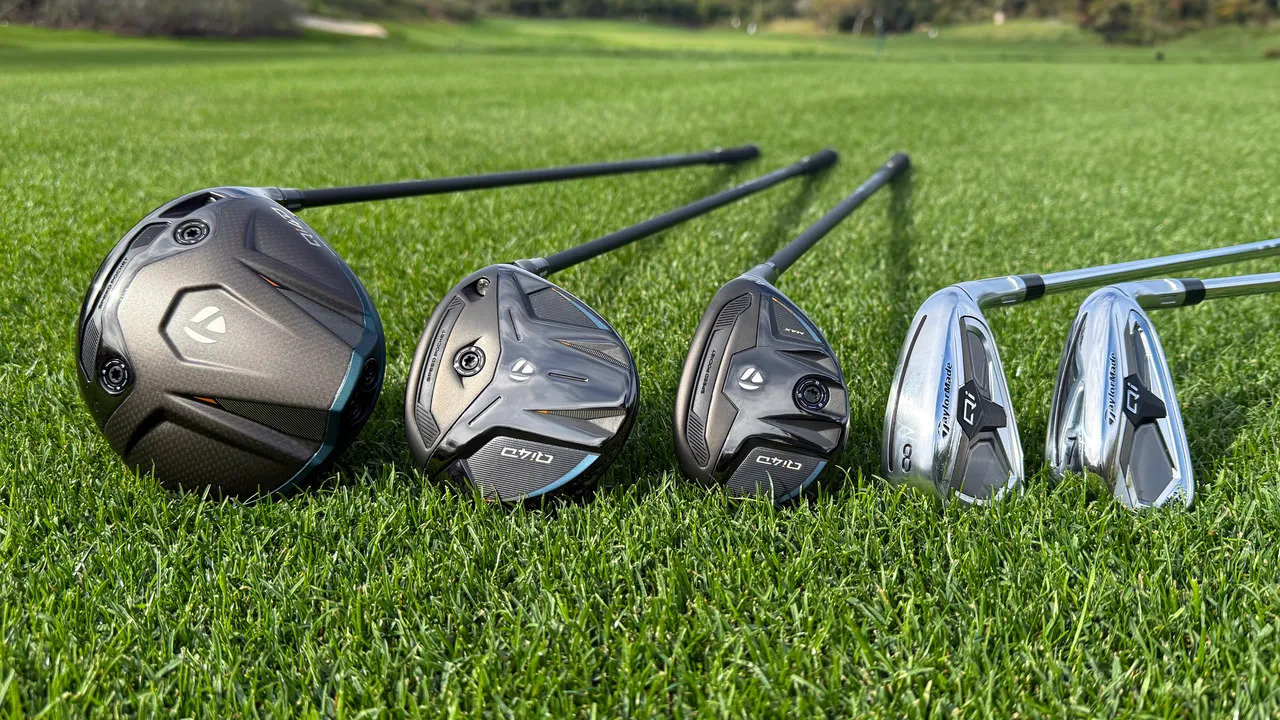
Fairway Woods (3-wood, 5-wood, 7-wood, 9-wood)
When comparing fairway woods to hybrids and long irons, you'll find fairway woods have the highest trajectory for their loft. They are the most forgiving (from a strike perspective, not necessarily the easiest to hit. A toe strike on a fairway wood will give you better results than an equivalent strike on a hybrid or long iron), the most airtime and steepest descent angle, therefore the shortest run, but they are the most affected by the wind. So when do they make it into your starting lineup?
Hybrids
Hybrids, as the name suggests, are the middle ground between woods and irons and, as such, you get some of the benefit from both sides, but also some of the challenges. So when do they make it into your starting lineup?
Long Irons / Driving Irons
Irons are more traditional than either hybrids or high lofted fairway woods. They are the least forgiving, lowest launching, shortest carrying and longest running. So when do they make it into your starting lineup?
By thinking this way, you’re not just filling 14 spots in a bag — you’re selecting a team.
And the smartest golfers aren’t choosing between woods or hybrids or driving irons permanently, just on a day to day and course to course basis.
They’re building a squad that includes both… and knowing exactly when to put each one into play — and when to leave it on the bench.







No comments yet. Be the first to comment!